Christmas, Pagan Roots, and Why Knowing This Changes Nothing About Why Christians Celebrate

You guys know me (but I suspect many of you will be new around here so I’ll share anyway!); I’m Woowoo Bestie AND I’m Christian. In fact, many of the “woowoo” practices I do today (moon rituals, essential oils, crystals, shadow work, mantras + mala beads, smoke cleansing, etc. COINCIDED WITH + deeply strengthened my relationship with Christ when I was returning to Christianity after growing up Catholic (we all know how that goes).
It was a shock to me when other Christians were baffled, confused, + even hateful toward me when they found this out; I couldn’t see one without the other. JESUS WAS SO WOOWOO, DUDE! But, you can read a bit more about that here .
But, this area of my life has naturally made me significantly more open minded when it comes to other faiths, practices, people of differing beliefs, + acknowledgement that many traditions (both associated with Christian holidays + not) originated + evolved from Pagan beliefs + practices. That doesn’t make me angry (I mean, co-opting another culture and faith practices is not cool but more on that later). It doesn’t make me think someone else is trying to pull away the meaning of Christmas from me. It’s just information, and interesting information. So with the risk I always take with angering some of my fellow Christians, here goes nothing:
Here's The Deal
For many Christians, Christmas is a sacred celebration of the birth of Jesus Christ, the Light of the World, + that truth remains unchanged. At the same time, it is historically accurate that many Christmas traditions, + even the date itself, have roots in older pagan + cultural practices connected to the winter solstice. Recognizing this does NOT diminish the meaning of Christmas. It places it within the broader human story of honoring light, hope, + renewal during the darkest time of the year. Because let’s be honest, even these early Christians recognized how cool + dope + beautiful it was to honor the gifts that were provided by nature + align with the cycles of nature (WHICH ARE LITERALLY ALL GIFTS FROM GOD + HOW WE WERE MEANT TO LIVE but this is not the time for my soapbox so…)
As Christianity spread through cultures already overflowing with beautiful seasonal rituals, early Christians OFTEN reinterpreted familiar symbols rather than erasing them, making the celebration of Christ more accessible + deeply resonant for new believers since there was less of an abrupt change + more of a… reimagining? That’s easier to adapt to.
Let’s Dig Into Some (EMPHASIS) of the Pagan / Christian Celebration Crossover
Why December 25th?
The Bible does not specify the date of Jesus’ birth, + many scholars believe He was likely born in the spring. Shepherds tending flocks at night + historical climate clues support this theory + there is nothing wrong with that.
So why December 25th?
In ancient Rome, late December was already filled with major celebrations. Saturnalia, held from December 17 to 23, honored Saturn, the god of agriculture. It was a week of feasting, gift giving, public merrymaking, role reversals, + suspension of normal social order. Slaves were temporarily freed from labor, gambling was allowed, + colorful clothing replaced traditional togas. The final days, sometimes referred to as Brumalia, marked the climax of the festival.
Around the same time, December 25 was celebrated as Dies Natalis Solis Invicti, the birthday of the Unconquered Sun. Emperor Aurelian officially established this feast in the 3rd century to honor the sun’s return after the winter solstice, when days begin to grow longer again. Light overcoming darkness was the central theme.
When Christianity became legalized and later favored under Emperor Constantine in the 4th century, the Church in Rome began celebrating the birth of Christ on December 25. Christ was framed as the true Light of the World, a powerful theological parallel to the sun imagery people already understood, here to overcome darkness. See? Easy swap, but a truth to the Christian faith regardless of the adoption of the timeframe.
Rather than competing with existing festivals, Christianity reframed them.
The Winter Solstice + Humanity’s Relationship With Light
The winter solstice, usually around December 21 or 22 in the Northern Hemisphere, marks the shortest day of the year. For ancient cultures, it was a powerful turning point when darkness reached its peak + the return of light began.
Across Europe, Scandinavia, and Slavic regions, this moment was honored through festivals like Yule, which included bonfires, Yule logs, feasting, + ancestral remembrance, all meant to invite back the sun and protect communities through winter. In Slavic traditions, Karachun acknowledged the height of darkness before the rebirth of the sun, while in Finland the sun goddess Beiwe was honored, sometimes envisioned traveling the sky by reindeer. These rituals centered on survival, renewal, + hope.
When Christians aligned the birth of Jesus with this season, His arrival became a profound symbol of light entering the darkness.
Evergreens, Trees, and Decorations
Evergreen plants were sacred across many pagan cultures because they remained alive during winter. They symbolized eternal life, fertility, + resilience. Nature is dope as hell isn’t it? (watch me making hell references in this Christian post… It is what it is).
Romans decorated homes + outdoor trees during Saturnalia. Germanic tribes brought greenery indoors + decorated trees in honor of Odin. In Norse mythology, the great world tree Yggdrasil represented the structure of the cosmos itself.
The Christmas tree as we know it likely developed in Germany during the Renaissance, but it had ancient predecessors. Early Christians reinterpreted the evergreen as a symbol of eternal life through Christ. Even the triangular shape of the tree was later associated with the Trinity, kinda cool.
Candles + lights OBVIOUSLY also predate Christianity. They were used to honor the sun, ward off darkness, + create sacred space. Christianity adopted this imagery seamlessly, connecting it to Christ, the Star of Bethlehem, + divine presence.
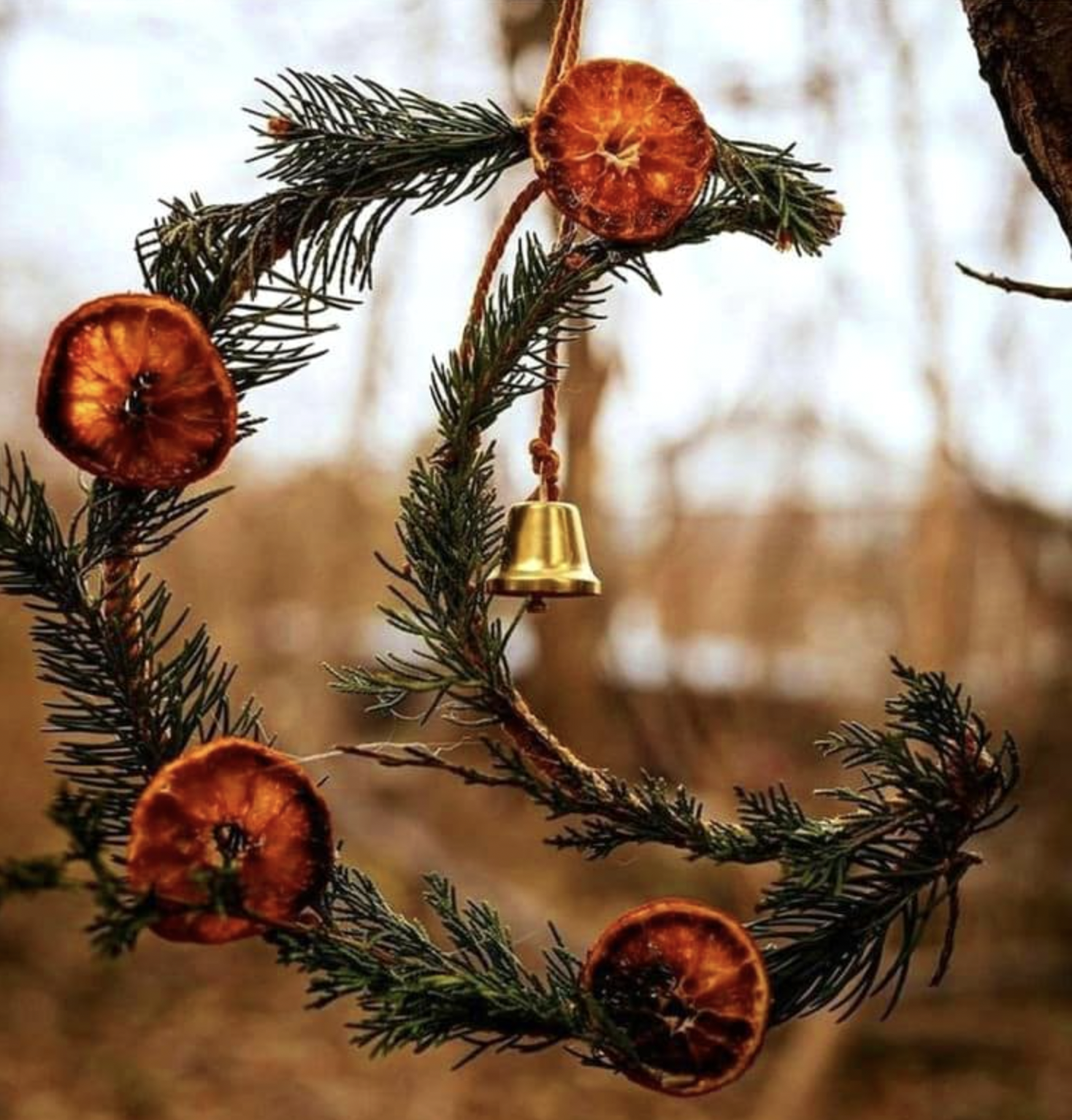
Holly, Mistletoe, + Wreaths
Holly + mistletoe were sacred plants in pagan traditions. Holly was associated with Saturn + used for protection + good luck. During Saturnalia, Romans exchanged holly wreaths.
Mistletoe was especially important to Druids + Norse cultures. It symbolized fertility, peace, + protection. Enemies who met under mistletoe were required to lay down their weapons and form a temporary truce (very sweet). Fertility rituals were also performed beneath it (very sexy).
Over time, these meanings softened into romance + goodwill. Christianity allowed these customs to continue, gradually stripping them of explicit ritual meaning while retaining their symbolic warmth.
Gift Giving, Feasting, + Carols
Gift giving during Saturnalia was meant to ensure good fortune + a bountiful harvest. Feasting marked the end of the agricultural year + celebrated survival through winter.
Yule feasts, boar sacrifices, + communal drinking were central to Northern European traditions. Even Christmas caroling has roots in Anglo-Saxon wassailing, where villagers went door to door singing blessings of health + prosperity. Tbh I woulda been OUTTA there. Being serenaded is one of my biggest fears. Truly. What do you do with your hands? Where are you looking? What do you say after?
St. Francis later Christianized this practice, encouraging carols that told the story of Christ’s birth.
What we now call the “Christmas season” mirrors these ancient festivals. It was never meant to be a single, quiet day.
Santa Claus + Older Archetypes
Santa Claus is rooted in Saint Nicholas, a 4th-century bishop known for generosity toward children + the poor (aaaaahhhh an OG Christian tradition that still exists). BUT, the imagery of a bearded elder delivering gifts through the sky echoes much older myths.
Odin, the Norse god, was depicted as a white-bearded figure riding an eight-legged horse across the sky. Children left food for Odin’s horse + received gifts in return. This imagery merged over centuries into what we now recognize as Santa, later popularized by 19th-century literature + 20th-century advertising.
Why This Does Not Diminish Christmas
The word “pagan” originally meant non-Christian. It was a broad label used by early Christians to describe existing polytheistic cultures. These people were not evil or ignorant (cue the angry DMs coming my way but hopefully not). They were deeply spiritual, attuned to nature, + committed to honoring life in ways they understood.
Early Christians knew people could not simply abandon their rhythms, rituals, + symbols overnight. By reinterpreting them through Christ, the Church allowed continuity rather than rupture.
This does not make Christmas less Christian. It makes it historically honest.
Many practices we engage in daily have pagan or pre-Christian roots: wedding rings, incense, herbal medicine, candles, seasonal celebrations, blowing out birthday candles, even the names of our days. We do not question our faith because of this.
Christmas is no different.
A Both-and-Reality
Long before Jesus’ birth, humanity celebrated the return of light in darkness. When Christ came, that longing found new meaning for Christians.
Understanding the origins of Christmas traditions does not strip them of holiness. It reveals how deeply human the desire for hope, warmth, + renewal truly is. Perhaps this understanding, if you weren’t aware before, brings some more compassion + understanding to those who are different from us: not evil, but with many yearnings + hopes + experiences that are similar to ours.
For Christians, Christmas remains a celebration of Christ’s birth. Knowing its layered history simply reminds us that God meets humanity where we already are, speaking through symbols, seasons, + stories we understand.
And if I, Suzy, and being really honest, I LOVE those Pagan traditions. I love the Pagan friends now. I’m so GRATEFUL that those practices remain alive + well today, keeping a population of people connected to nature, + reminding us that we were meant to be in tune with nature as well.
And that, if anything, makes the incarnation even more powerful.
